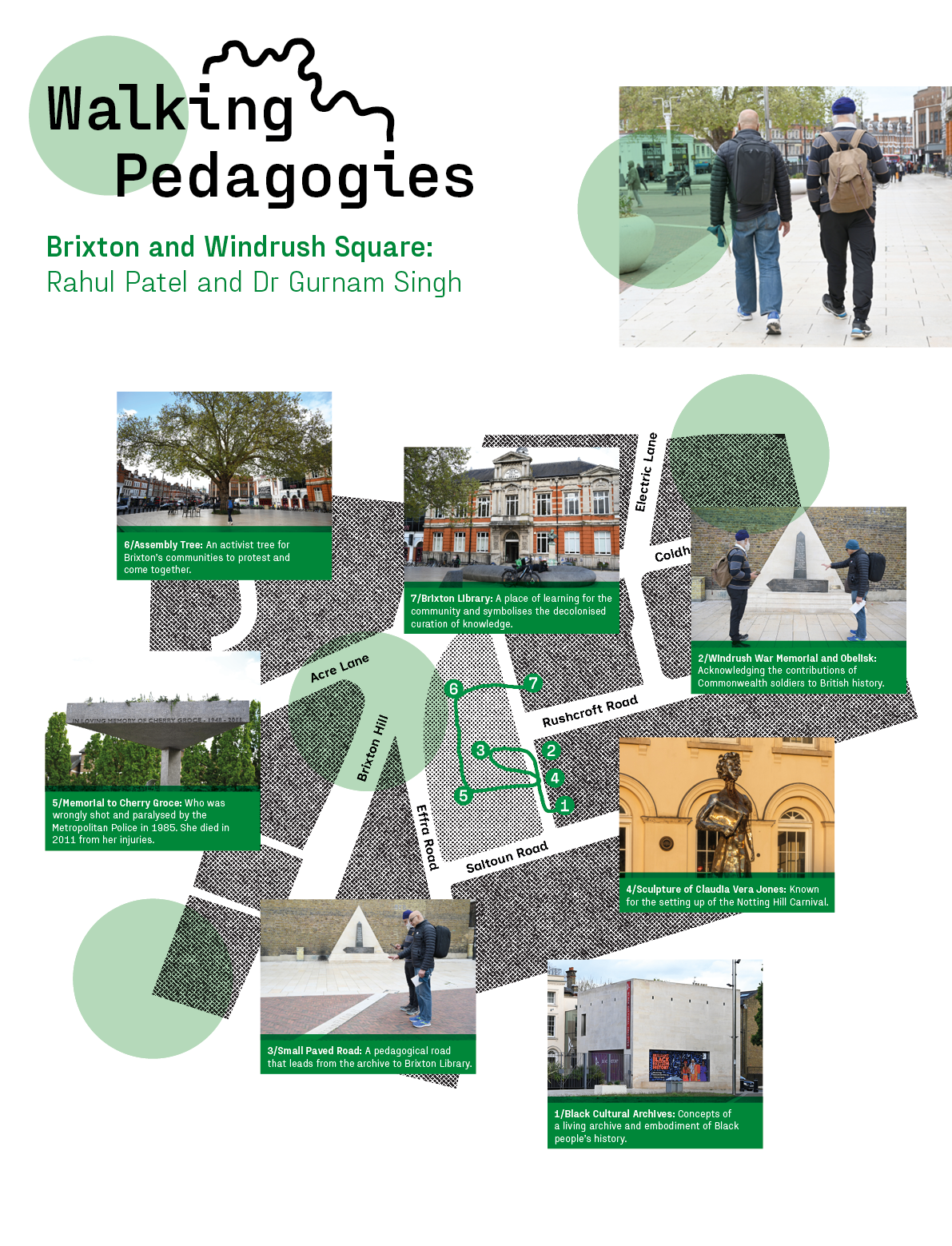
“the archive is about historical narration, rediscovering yourself, looking at the intricacies of your past in the way that is not taught in the education system”
Rahul Patel
Rahul Patel takes Dr Gurnam Singh on a walk around key monuments and buildings in Windrush Square in Brixton, South London, where he grew up. Through these sites we learn about the often-overlooked contributions of the Windrush generation to British society as well as the barriers and discrimination that Black communities have faced, particularly in terms of education. The points on the walk mark key events that led to the 1981 uprisings that demonstrated against the prevalent structural racial inequality in Britain.
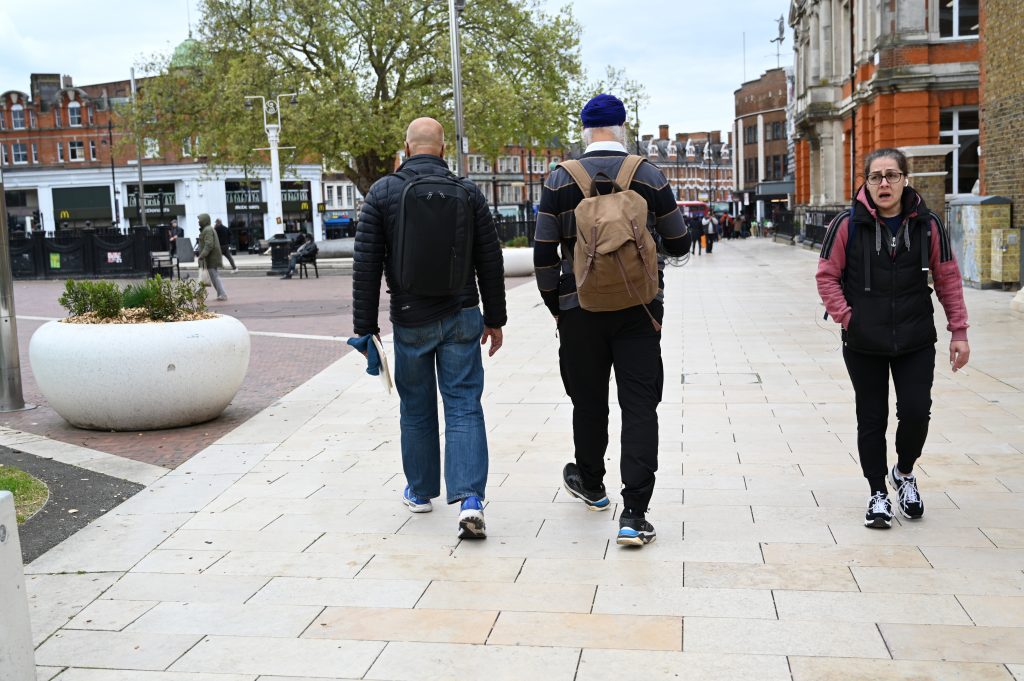
The walk starts in the far corner of Windrush Square and we find a small paved path that Rahul describes this as a ‘pedagogical road’; leading us through a number of sites that describe historical turning points for the Windrush Generation. Along the walk we encounter monuments, statues, an archive, sites of protest as well as the local library, all of which piece together a story of discrimination, resistance, activism and empowerment for local communities. We hear about Rahul’s childhood growing up in Brixton, and the racism he witnessed at school. We also hear about his teacher and mentor who inspired Rahul to do the work he does today. Ending in Brixton Library, we get an insight into this important ‘living resource’ as a loved and activated site for learning and activism.
Listen to Walking Pedagogies Windrush Square: Via Soundcloud, spotify or your usual podcast provider.
Download a transcript of the walk here.
Podcast Chapters:
- Introductions: Rahul and Dr Gurnam Singh introduce themselves and Windrush Square.
- What is the Windrush Generation?
- African and Caribbean War Memorial: In memory of servicemen who served Britain in the First and Second World Wars.
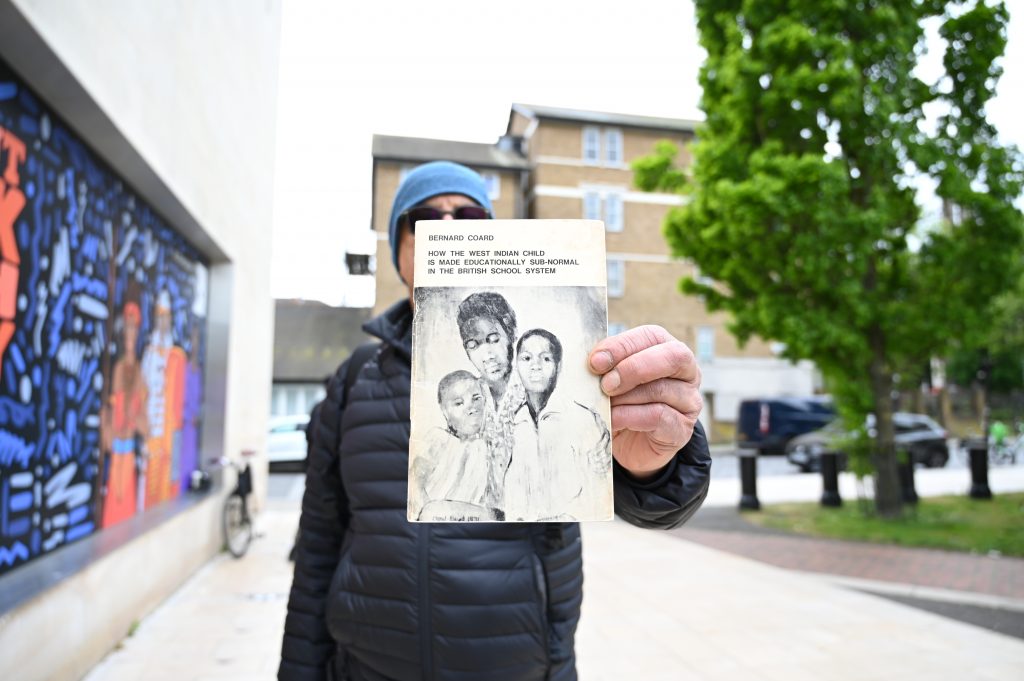
- (Outside the Black Cultural Archives). Publication by Bernard Coard: discussing the racism the Windrush Generation faced, particularly in terms of education.
- Black Cultural Archives: a living embodiment of Black People’s history in Britain.
- Sculpture of Claudia Vera Jones: discussing her activism and the Notting Hill Carnival.
- Race and the class struggle: anti-racist struggles were also about liberating the working class.
- Centre of Windrush Square: 1981 uprisings across South London.
- Racism and growing up in Brixton: Rahul’s story.
- Shockwaves of the 1981 uprisings: and influential voices in education.
- Monument to Cherry Groce: Her story and how it relates to deaths in police Custody.
- Monument to the Sharpeville Massacre
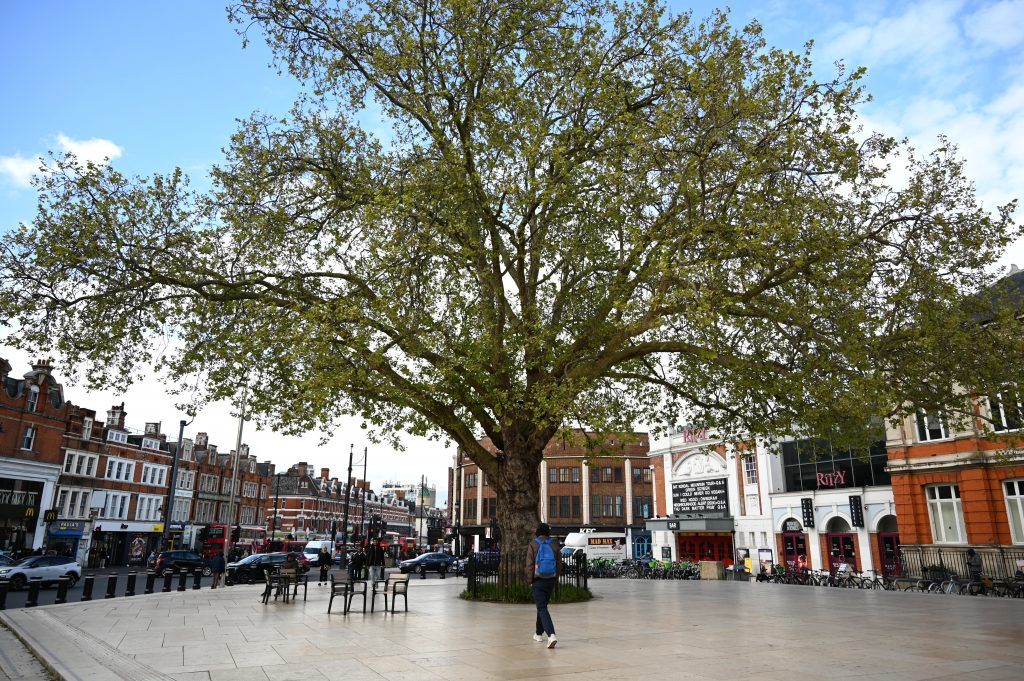
- Brixton Protest Tree: a place for the community to gather and share their voice
- Statue of Henry Tate and discussion around statues and their place today.
- Brixton Library: Portraits in the reading room. Farrukh Dhondy was Rahul’s English teacher at school and an inspirational activist.
- Resisting Oppression: The Race Today Collective and Black Scholarship.
- Brixton Library: a place of learning and living resource for the community.
Speaker Biographies:
Rahul Patel teaches on both the MA and BA Culture, Criticism and Curation programmes at Central Saint Martins, University of the Arts London. He is also involved in Transformative Teaching Pedagogies programmes as part of the University wide academic support team including Reading Collections which is based on African-Caribbean, Asian & African Art in Britain Archive at Chelsea College of Art. He has also co-curated Decolonising the Arts Curriculum Perspectives in Higher Education zines 1 & 2. With Gemma Riggs and Nicola Tagoe, he has co-produced, Frantz Fanon’s Black Skin, White Masks. Interpretations, Art and Pedagogy.
Gurnam Singh is currently Hon Associate Professor of Sociology at the University of Warwick. From 2018-24, he was Fellow in Race and Education at UAL. He is an activist researcher, writer, and educator whose work focuses on issues of social justice, anti-racism, decolonisation, and critical pedagogy. He has an extensive publication record and his significant contributions to higher education have been recognised with a National Teaching Fellowship (2009) and being made a Fellow of the Royal Society of the Arts (2018).
References:
Black Cultural Archives – Subject guides https://blackculturalarchives.org/subject-guides
Coard, B. (1971) How the West Indian Child Is Made Educationally Subnormal in the British School System. London: New Beacon Books
James, C.L.R., 2001. The Black Jacobins: Toussaint L’Ouverture and the San Domingo Revolution. 2nd ed. London: Penguin Books.
Jantjes, G (1983) Words about us. ARLIS/UK course ‘Visual art documentation for a multi-cultural society’, held at the Commonwealth Institute, London. https://decolonisingtheartscurriculum.myblog.arts.ac.uk/files/2022/05/The-words-about-us.pdf
John Siblon (2016) Negotiating Hierarchy and Memory: African and Caribbean Troops from Former British Colonies in London’s Imperial Spaces, The London Journal, 41:3,299-312, DOI: 10.1080/03058034.2016.1213548 https://doi.org/10.1080/03058034.2016.1213548
Patel, R (2026). British Black Panthers
The Tate Galleries and Slavery https://www.tate.org.uk/about-us/history-tate/tate-galleries-and-slavery